Olga Larina
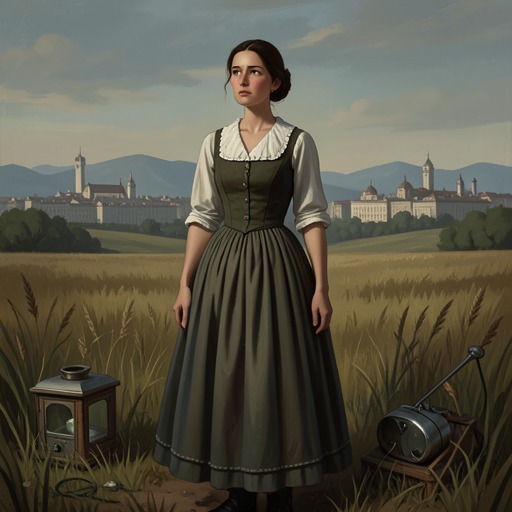
Eugene OneginOlga Larina, the younger sister of Tattiana Larina, is introduced through her brightness and beauty, but her decisive role emerges through the speed with which her life moves on after Vladimir Lenski’s death. Beloved by Lenski and cherished by Tattiana as her companion from childhood, Olga eventually marries a lancer and leaves the family home. Her departure turns the loss of Lenski into a second separation for Tattiana, whose grief lingers after Olga’s affection has found a new object.
Identity and Introduction
The narrative names Olga against the qualities associated with her sister: Tattiana does not become notable through her sister’s brilliance or beauty. The comparison establishes Olga as the more conspicuous of the two, while also making clear that the sisters are not defined by the same qualities. Olga’s brightness is part of how she is seen; Tattiana’s inward distinction develops along a different path.
Olga’s literary education is described through a pointed pairing of Rousseau and Richardson, authors associated in the poem with love and romantic adventure. The detail places her within a world of inherited literary expectations, though the evidence does not make her reading a guide to any reflective inner life. Her father, meanwhile, is characterized as a decent man who is rather old. These brief family details situate Olga within the household without displacing the qualities on which the narrative chiefly focuses: her beauty, her charm, and the attachments formed around her.
Lenski’s Beloved
Vladimir Lenski becomes increasingly captivated by Olga’s beauty. The poem describes him as growing more and more its slave, giving his feeling the language of willing bondage. His devotion supplies the emotional contrast that will matter after his death: he is intensely attached to Olga, while her later story moves forward with striking speed.
Olga is not merely the object of a passing description. Her relationship with Lenski connects her to the chain of events that ends in his death, and his attachment makes the eventual change in her affections consequential. The narrative’s account, however, does not present a prolonged struggle in which Olga deliberates over his loss. Instead, it sharply juxtaposes Lenski’s tears and death with the appearance of a new lover.
After Lenski’s Death
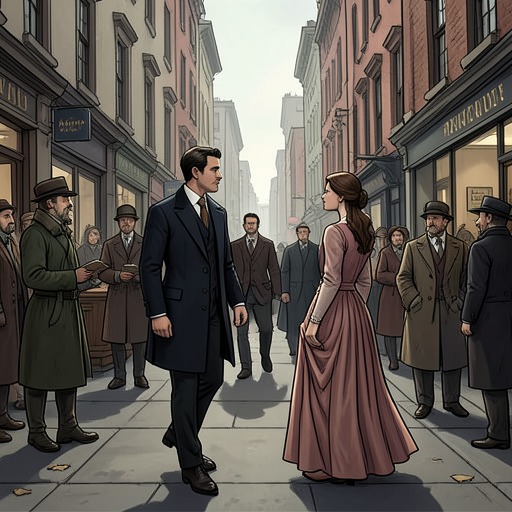
The poem says that Lenski is mourned only briefly before Olga proves unfaithful to his memory. Another man is able to assuage her sorrow through flattery and the arts of courtship; that man is a lancer, who captivates her heart. Olga becomes devoted to him, and the pair appear before the altar. The sequence is compressed but unmistakable: mourning gives way to new attachment, and new attachment to marriage.
This transition defines Olga’s response to bereavement in the narrative. It does not establish that she never grieved, but it stresses how little time passes before her grief is displaced by another courtship. The contrast is especially sharp beside Tattiana, for whom Lenski’s death is bound up with a wider sense of loss. Olga’s movement toward marriage and Tattiana’s continuing sorrow are different consequences of the same catastrophe.
Marriage and Departure
After Olga marries the lancer, her voice is no longer heard through the family home as before. The lancer is bound to his calling, and Olga leaves with him; the familiar household therefore changes not only because of the marriage itself, but because the couple’s life carries her away from it. The poem renders this separation through what can no longer be heard: Olga’s lively accents cease to sound in the place where they once belonged.
Tattiana watches the married couple for a long time as though through a haze. The image gives Olga’s departure an immediate emotional witness: for Tattiana, the bride is not simply a sister beginning married life but the friend of childhood being taken away. The poem calls Olga Tattiana’s dove and darling little pet, language that makes the intimacy of their bond palpable even as Olga leaves it behind. Her marriage thus closes one phase of the sisters’ shared life and deepens Tattiana’s isolation after Lenski’s death.
Narrative Role and Significance
Olga’s function in the story rests on contrast and consequence rather than extended introspection. She is introduced as brilliant and beautiful, adored by Lenski, and finally drawn into a new attachment that quickly becomes marriage. Each change in her situation alters the emotional world around her: Lenski’s devotion makes her central to his romantic life, while her departure leaves Tattiana without the companion of her childhood.
The difference between the sisters is clearest in the aftermath. Olga’s sorrow is described as brief and susceptible to flattery and courtship; Tattiana’s gaze follows the departing couple through a haze. The poem does not need to explain the sisters’ feelings at length: the swiftness of Olga’s remarriage and the lingering image of Tattiana watching carry the contrast. Olga’s story is therefore not only that of a young woman who marries a lancer, but also the account of how one household bond ends just when Tattiana is already confronting loss.